
Exhibitions
Exhibition Venues
Onsite Exhibitions
In addition to the Kirwan Collection on permanent display in the Wendt Room, the Athenæum hosts several exhibitions each year showcasing materials from the collections and related works. Subjects have included Salem imprints, children’s books and their illustrators, decorated book covers, Jacob Bigelow’s American Medical Botany, works on insects, archival records about the planning and construction of Plummer Hall in 1907, and popular reading from 1760-1810.
We encourage members to curate an exhibition of their interest or of their own collections.
Digital Exhibitions
Honorary curator, Elaine von Bruns, has created most of the exhibitions in recent years, and has now helped us create our first digital exhibition. Displaying rich marbling, tiny decorative patterns, and mood-setting illustrations, Under the Covers: The Hidden Art of Endpapers is now a permanent on-line feature. Click below to take a tour under the covers of the Salem Athenæum collection.
View Under the Covers.
Current Exhibition
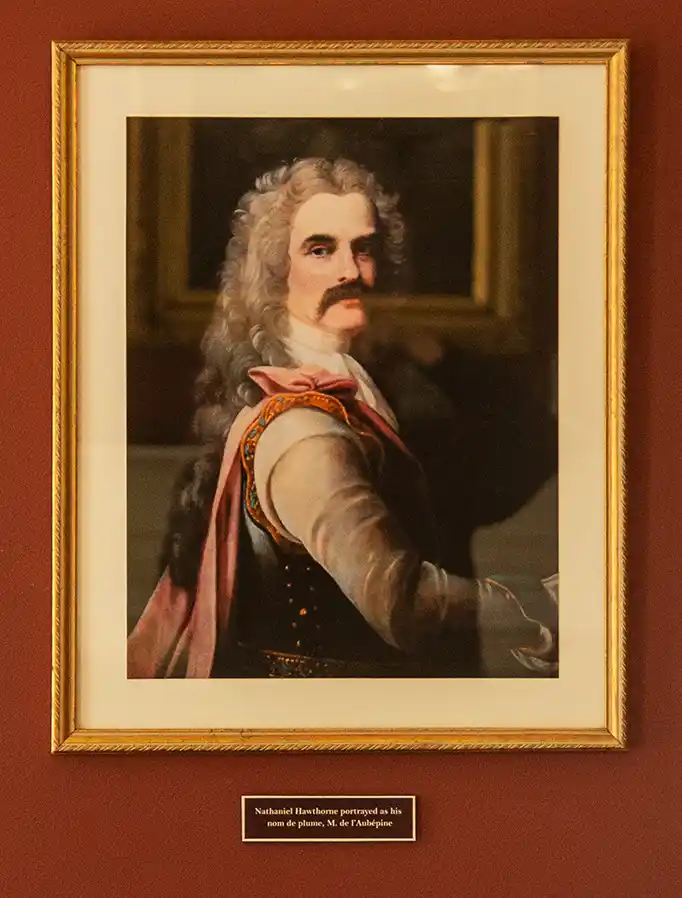
Incognito
Incognito reveals hidden aspects of authors’ lives! Some writers conceal their names to avoid debt or a questionable past. Some take different names to spark creativity, to write in a different genre, or to safely express controversial issues. Many women have taken male pen names to gain readers and sell more books. Others adopt alternate names just for fun.
Find out more about Agatha Christie, the Brontë Sisters, Charles Dickens, Voltaire, Isak Dinesen, Ben Franklin, Stephen King, George Orwell and many other celebrated authors you thought you knew!
A sideshow within the exhibit features incognito animal and plants that mask their identity for many of the same reasons authors do—safety, nourishment, and to attract followers.
The exhibit poster shows Nathaniel Hawthorne dressed as his pen name, M. del’Aubépine.
The exhibition is free and open to all during the Athenaeum’s regular open hours:
Tues. – Fri., 11:00 A.M.–6:00 P.M.
Sat., 11:00 a.m. – 4:00 P.M.
Past Exhibitions
Enchanted Lands
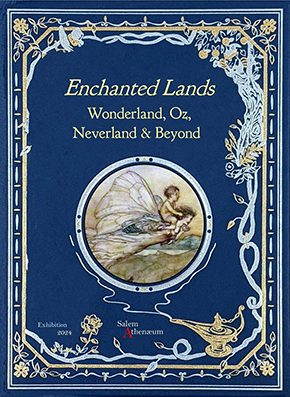
Enchanted Lands:
Wonderland, Oz, Neverland & Beyond
Fall 2023-2024
In our Rare Books Room sat entire worlds, rendered by striking illustrations and detailed maps, left unacknowledged for decades after the last child turned its pages. Fortunately, there were some who desired to become reacquainted with these legendary locales. Through Elaine’s efforts, the books of these magical places were united and given another chance to see the light of day.
All this and more is the foundation of our Enchanted Lands exhibit, with literature-based tours of everywhere from Oz to the Hundred Acre Wood. Guests on this exploration will learn the recurring themes that have linked these worlds together, such as the power of flight, owls functioning as magical companions, and the growing and shrinking of intrepid young protagonists.
One will also have the chance to observe unique and rare items kept by the library, like a 1678 dissertation attempting to prove the existence of unicorns through fossil evidence, or a volume from the first edition of Alexander Wilson’s books on ornithology. Even the flat cases displaying these items have a story all their own, having once been sent by Salem’s Essex Institute to display historical pieces at the 1893 Chicago World’s Fair—the very event attended by L. Frank Baum himself.
As you walk through this exhibit, consider the earnest lessons of these stories along with their appearance and history. These lands may foster a pleasant nostalgia, but they also have much to tell about enduring the scary outside world, learning to be confident in oneself, and how to accomplish maturity without losing the love for the everyday world that our child-selves had. It would be improper to keep these patrons of myth and magic waiting, and you will be surprised by what you find.
Fashion Throught the Pages
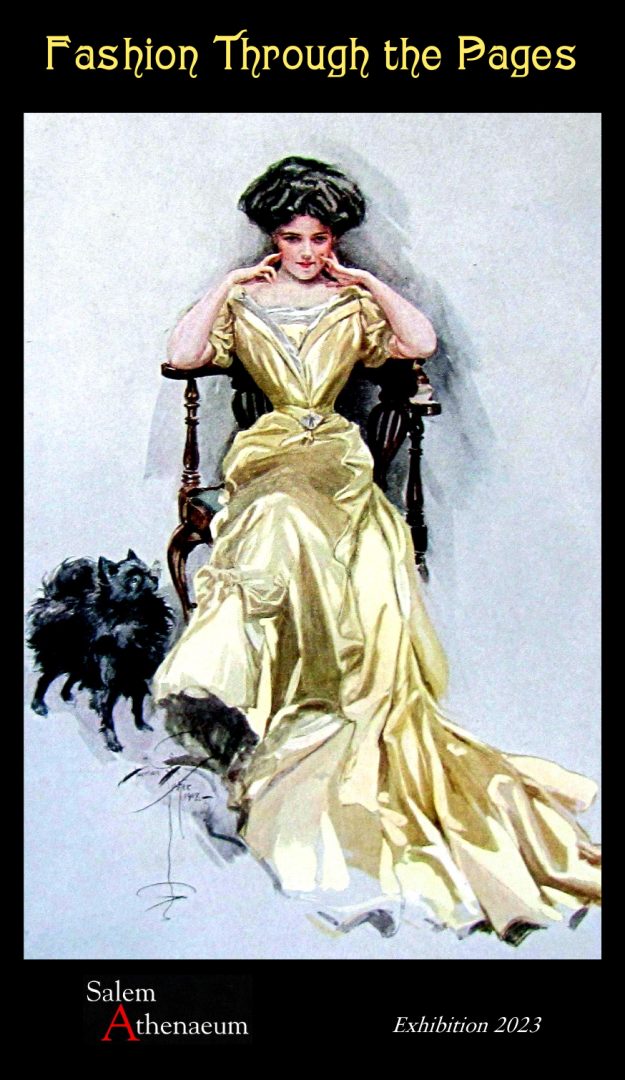
Fashion Through the Pages
Winter 2023
See fashions on paper and porcelain, children’s clothing trends in St. Nicholas Magazine, Art Deco cover girls with over-the-top hats, famous top-hatters, a caged corset, a satire of A. A. Milne’s When We Were Very Young, and much more.
Salem Confidential
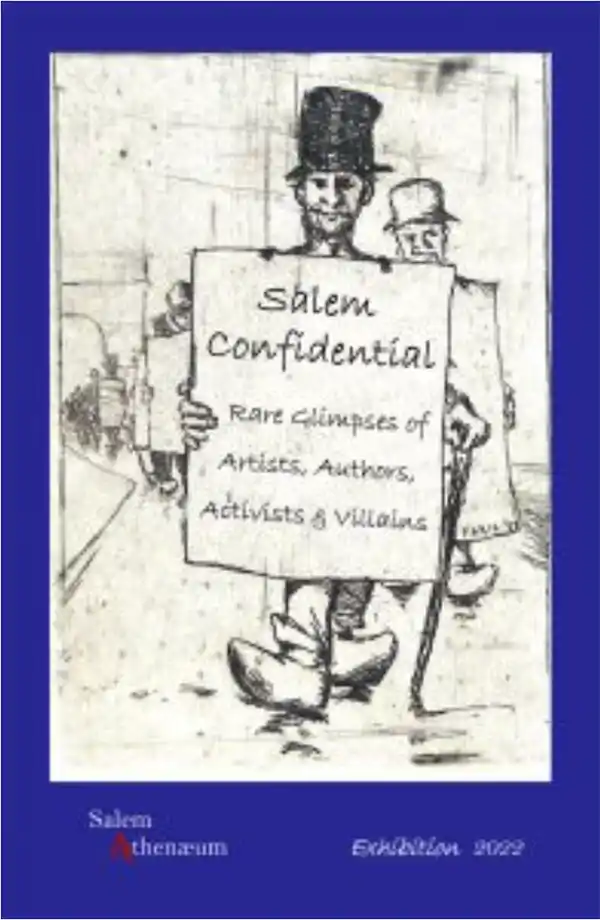
Salem Confidential
Winter 2022
Curator Elaine von Bruns has assembled an astonishing exhibition of the Salem Athenaeum’s seldom-seen art and books that tell surprising stories about Salem people.
The tantalizing tidbits and tales within must be seen to be believed!
- Early prints (1883) of the artists, Frank W. Benson and Joseph Lindon Smith
- Pamphlets written by a Salem-born author with a famous name promoting a fraudulent investing scam in the 1910s
- A literary hoax about witchcraft which was a best-seller in the 1840s
- Rare 1830 pamphlet about the murder of Capt. White and the sensational trial.
- Hawthorne’s signature on a Custom House document
- Sheet music for The Wreck of Hesperus, a cantata based on Longfellow’s poem and set off the coast of Gloucester.
- Sheet music for Puritania, an opera about a Salem girl accused of witchcraft.
- Rare books by Salem abolitionists
Love for All Seasons
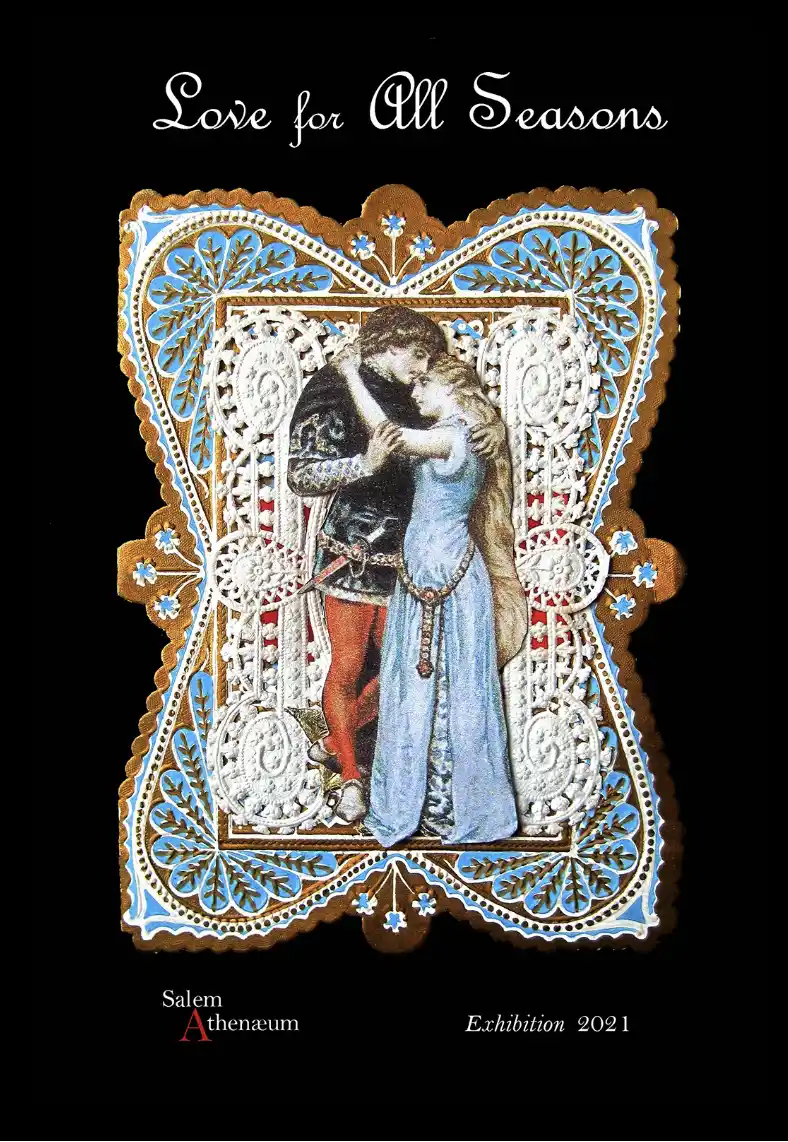
Love for All Seasons
February 2021
as there are hearts.”
For everyone’s safety, all visits are limited to 30 minutes, but Love for All Seasons will be on display for several months, so please come and see it more than once!
The exhibition is free and open to the public during regular Salem Athenaeum hours. Tuesday — Friday: 1 PM – 6 PM and Saturday: 10 AM – 2 PM.
Cosmos: Sand Dollars to Stars
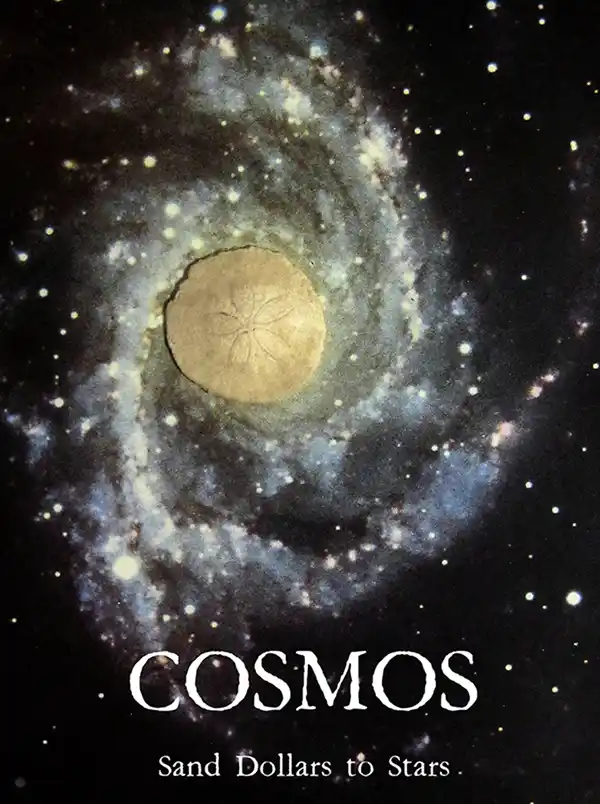
Cosmos: Sand Dollars to Stars
Fall 2019-Fall 2020
Young children are curious about everything; they are constantly asking why. This exhibit celebrates people whose wonder was life-long and whose scientific discoveries extended human understanding, from sand dollars to the stars.
We start with Isaac Newton and a spectrum of his works, centering on Principia Mathematica, which is considered the founding document of modern science and the point of origin for our understanding of the physical world.
We continue with works by scientists who followed Newton, such as Benjamin Franklin, Charles Darwin, and Nathaniel Bowditch, the Salem-born mathematical genius. Bowditch, protégé of and later benefactor to the Salem Athenaeum, was inspired by the very books displayed in this exhibit.
In the 21st century, these books of science still spark wonder and the spirit of discovery.
The Cosmos opening event on November 22, 2019 from 6:00-8:00 p.m. included a brief presentation by Dr. Hale Bradt at 7:15 p.m. on Isaac Newton’s works displayed in the exhibit.
The Grand Tour
The Grand Tour
Spring – Summer 2019
If a European vacation is not in the cards for you this summer, then why not stop by the Salem Athenaeum’s current exhibit, The Grand Tour and take a virtual tour in time and books and see how people used to travel—you’ll be surprised at how little has changed in the past two centuries.
The Grand Tour features books from the library’s historical collections that cover the tourist hotspots of the 18th and 19th centuries, many of which remain popular to this day—Paris, Mont Blanc, Rome, Venice, ruins at Pompeii and Vesuvius, the Rhine, Spanish castles and more!
Travel guides existed long before Fodor and AAA published them. A few, such as the 1756 edition of Nugent’s The Grand Tour, Or A Journey through Netherlands, Germany, Italy and France and a 1776 reprint of the 1611 travelogue Coryat’s Crudities, which was owned by early Athenaeum member Ernestus Plummer (and includes his copious notes), are on display as well as some practical road guides like The Post Roads of Europe, Being A New Edition of the Work Published by Authority during the Reign of Napoleon from 1820—complete with foldout maps! Several Baedeker guides for various European destinations are also peppered throughout the exhibit to help you stay oriented while taking your Grand Tour at the Athenaeum.
Making a packing list is a must for any long voyage, and in many cases the Grand Tour took months or years. Exhibit curator Elaine Von Bruns compiled a pamphlet entitled Advice for Grand Tourists, which includes a sample itinerary and packing list, to make sure no one forgets their carving set or mosquito net.
One exhibit case dedicated to social commentary of the Grand Tourist, juxtaposes satire such as Alexander Pope’s The Dunciad (1757) and Laurence Sterne’s A Sentimental Journey through France and Italy (1768), with books by serious European travelers including American activist, Frederick Douglass (1893), and feminist, Lady Mary Wortley Montagu (1837).
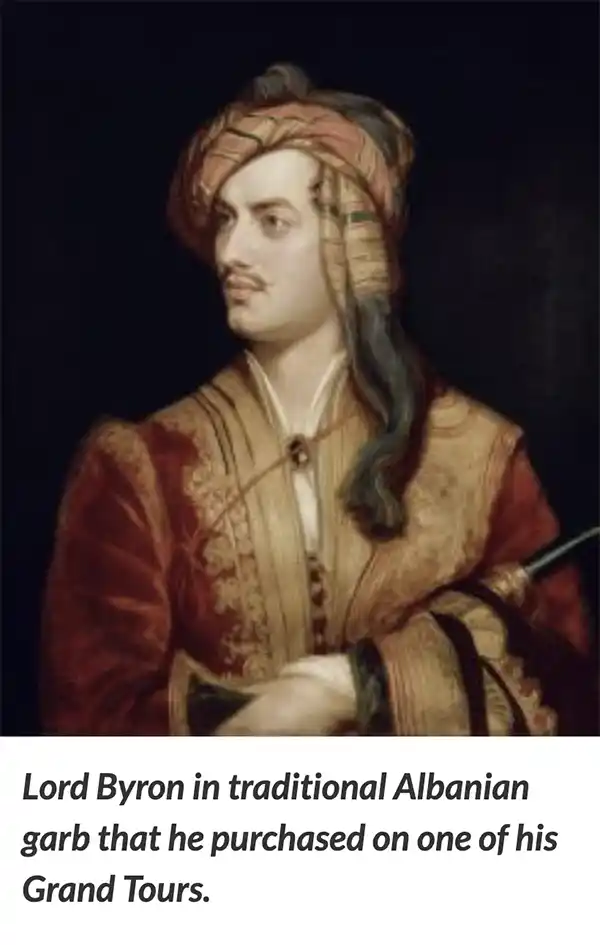
Perhaps the most documented of the Grand Tourists, however, was British poet Lord Byron (1788-1824), who toured Europe several times and referenced it much in his works. Lord Byron: Mad, Bad, and Dangerous to Know, a lecture on Byron, his Grand Tours and other exploits, will be held at the Athenaeum on June 26 at 7:00 p.m. Janina Majeran, Reference and Young Adult Librarian at the Swampscott Public Library will present.
The Language of Flowers
The Language of Flowers
Fall- Winter 2018 – 2019
The Language of Flowers
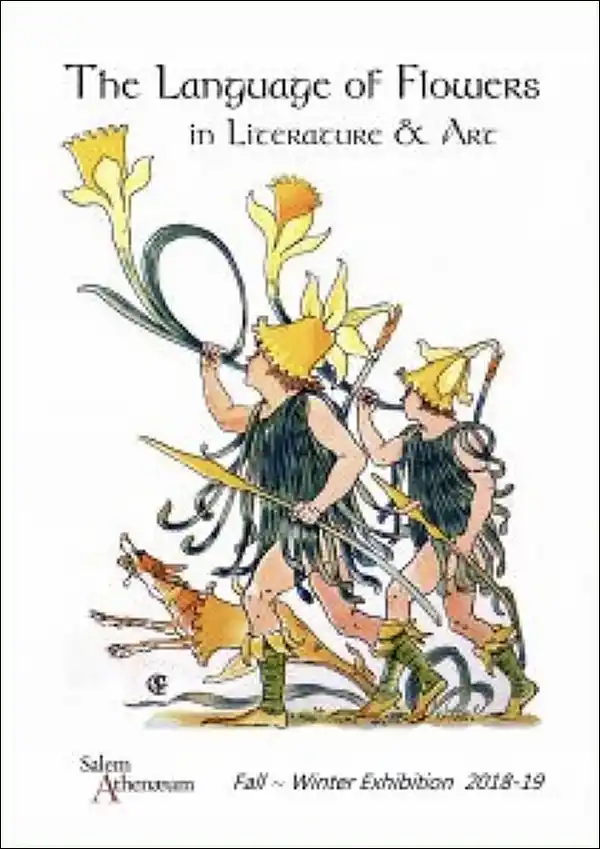
The Language of Flowers began in the East, where people exchanged gifts of flowers and objects, each with a symbolic meaning. In the 18th century, Europeans discovered this pastime in Turkey, brought it home and adapted it to their own culture.
By the 19th century, the Language of Flowers was spoken fluently in Europe and America. People consulted
Language of Flower dictionaries and exchanged floral gift books, calendars and cards. They sent messages by way of bouquets which allowed them to express their affection privately and silently.
This exhibit of rare and beautiful books features flowers as envoys.
“Then, gather a wreath from the garden bowers, And tell the wish of thy heart in flowers.”
James Gates Percival
Quinton Oliver Jones (1903-1999)
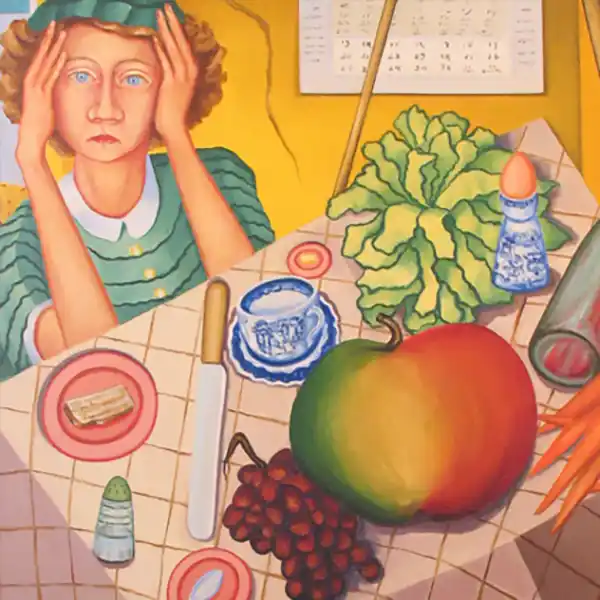
Quinton Oliver Jones (1903 – 1999)
Fall- Winter 2017 – 2018
Quinton Oliver Jones and his two siblings grew up in their family’s ancestral home in Salem, MA. He was great-grandson of a sea captain who sailed during Salem’s golden age of navigation. A close-knit family, the Joneses were nurturing, church-attending, and somewhat protective. However modest their circumstances, education was the greatest valued priority and all the children graduated from college. Quinton attended Salem public schools and entered Harvard in the class of 1926. Initially declaring English as his major, he was quickly drawn into the art department from which he graduated cum laude.
The year 1926 was pivotal in his life—his father died two months before his graduation, and his uncle died several months after. With siblings now pursuing their academic careers away from Salem, he was left to take care of his ailing mother and the family home. Quinton chose to make the most of his proximity to Boston and augmented his art studies over the next three years by enrolling in the Museum of Fine Arts, Boston, where he studied sculpture and he learned the techniques of stone carving and modeling in clay.
His family home shaped many of his interests and art work—the house was full of books, magazines, and newspapers that had been saved from previous generations. He read voraciously, and took many themes from this source material, as well as current events. Quinton led a quiet, dedicated, frugal and independent life, focused on his art—his creativity sustained him.
Throughout his long life within the 20th century, Quinton left us 360 canvases, with themes from mythology, Shakespeare or fantasies of imagination. Not being especially interested in rendering realistic landscapes, still life or portraiture, his work may be described as “mindscapes.” As he once said, “I paint what I think.”
He also modeled numerous sculptures, including portrait busts of children from the Salem orphanage. Also a poet, he often incorporated verse into his paintings. Later, as deafness overcame him, he withdrew into his more private and visionary world.
This Fall the Salem Athenaeum presents an exhibition drawn from Quinton’s body of work, most of which has never been seen by the public before. Discover his colorful, fantastical mindscapes, which will be displayed throughout the first floor of the library.
What Hawthorne Read
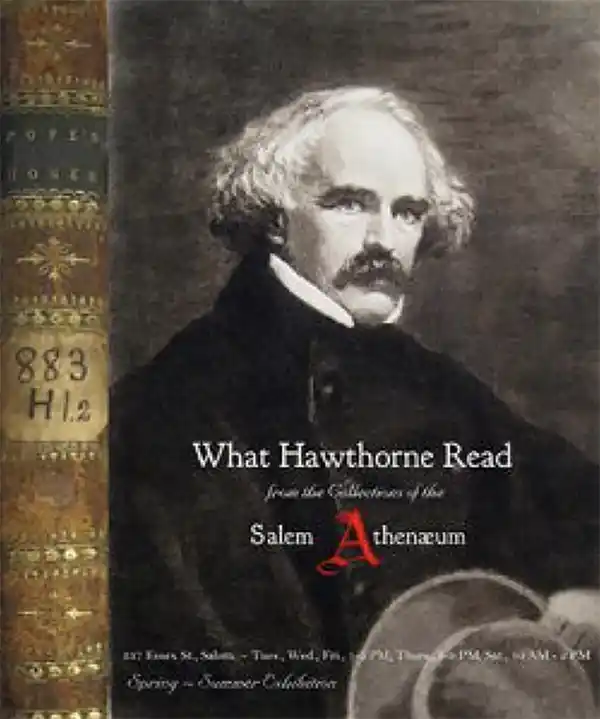
What Hawthorne Read
from the Collections of the Salem Athenaeum
Spring – Summer 2017
Nathaniel Hawthorne delved into the depths of human nature in his fiction and prose. A keen observer of people and places, including his hometown of Salem, he enhanced his vision with extensive reading.
Between 1828 and 1855, Hawthorne took out hundreds of volumes from the Salem Athenaeum. They included books of history, poetry, fiction, philosophy, religion, science and travel, written in French, German and Spanish as well as in English.
Some of what he gleaned from his reading appears, transformed, in his writing. Like the soap bubbles he describes in The House of The Seven Gables, his work portrays life in “hues as bright as imagination.” Visit our Spring Exhibition and see a selection of the books that Hawthorne borrowed, often accompanied by passages from his own work.
Salem (1827) cites the 1694 law that punished adulterers by forcing them to wear a cloth with a capital letter A. Hawthorne took out this book in 1840, only months before beginning The Scarlet Letter.
A volume on snakes in George Shaw’s General Zoology of Systematic Natural History (1802) is the very book which Hawthorne describes in his story, “Egotism, or the Bosom Serpent.” Hawthorne also wrote in Septimius Felton, of a bird-catching spider, which is boldly illustrated in another volume on display.
Hawthorne’s uncle, Robert Manning, wrote The Book of Fruits and developed orchards in Salem and Maine. His Dearborn Street Pomological Gardens had over 1,000 varieties of fruit trees.
In 1831, Hawthorne read the beautifully illustrated English Botany (1790) by James Sowerby. Hawthorne wrote extensively and sensitively about flowers, with particular admiration for the water lily.
Benjamin Franklin’s Experiments and Observation on Electricity (1774) is displayed with Hawthorne’s anecdotes about Franklin.
James R. Mellow, in his biography of Hawthorne, wrote that Hawthorne had a special interest in A Complete Collection of State-Trials compiled by Thomas Bayly Howell (1742), with its ancient accounts of criminal justice in England. He pored over the heavy folios for hours and later claimed he got “more delectation out of them than tongue could tell.”
Elections: Winning the Vote
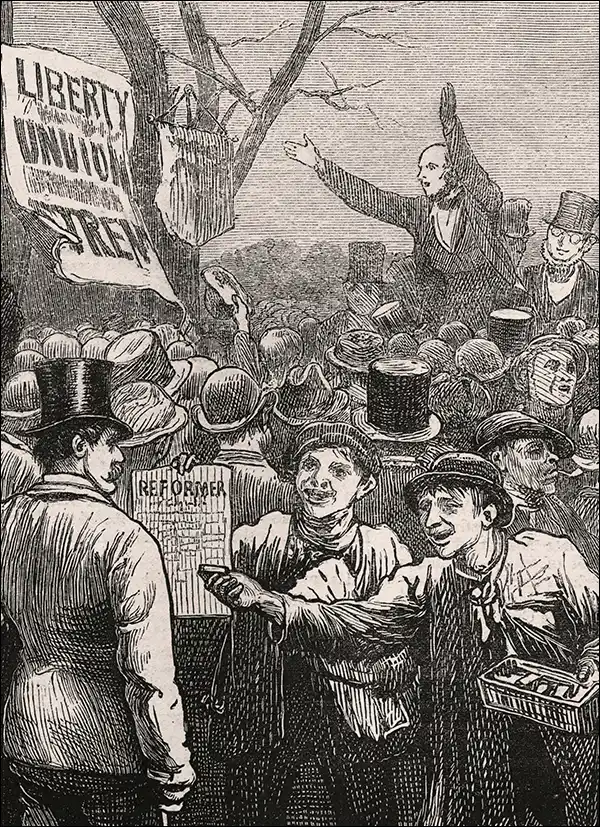
Elections: Winning the Vote
Fall 2016
Elections: Winning the Vote celebrates our right to vote, from colonial election festivities to the achievement of suffrage by Blacks, women, and Native Americans. The exhibit includes campaign posters, buttons, and books from the Athenaeum’s collection.
In Colonial America, Election Day was the largest holiday celebration. It had its own rituals akin to today’s Memorial Day parade or pumpkin pie on Thanksgiving. Schools and businesses closed and families gathered. In New England, the first order of business was always the Election Day sermon. A great honor, each year a different minister was selected to deliver the sermon and it was often published as a pamphlet following the election. The Salem Athenaeum has a collection of approximately twenty local Election Day sermon pamphlets. The 1765 sermon preached by Rev. Andrew Eliot of Boston was the source for the Athenaeum’s Election Day celebration on Columbus Day 2016.
The nineteenth- and twentieth-century struggles for Black, Women and Native American suffrage are well documented in the Salem Athenaeum’s Historical Collections. Among the volumes displayed were Ecce Femina: The Woman Question, 1870; Woman’s Worth and Worthlessness, 1872 (an argument against women’s suffrage); Woman in the Nineteenth Century by Margaret Fuller, 1874; Life and Times of Frederick Douglass, 1893; and Booker T. Washington’s Up from Slavery, 1901.
Curated by Elaine von Bruns.
Samuel Hall: Patriot Printer of the Revolution
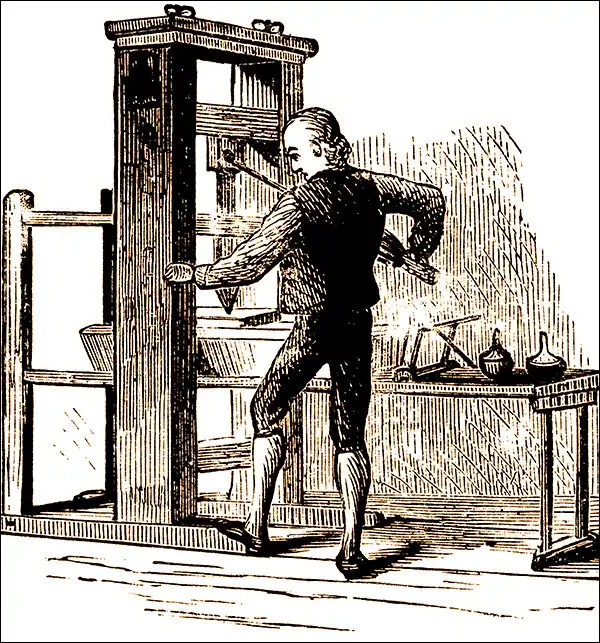
Samuel Hall: Patriot Printer of the Revolution
Fall 2015 – Winter 2016
Curated by Dr. Matteo Pangallo, a Junior Fellow of Harvard University, the Athenaeum’s new Fall/Winter Exhibition, “Samuel Hall: Printer-Patriot of the Revolution,” provides an in-depth exploration of the life and work of Salem’s first printer. Included in the exhibit are many of Hall’s publications, such as books, pamphlets, almanacs, newspapers, and more, from a private collection and the Salem Athenaeum.
Samuel Hall was a leading member of America’s printing and publishing industry in the colonial and early republic era. After apprenticing with his uncle, the first printer in New Hampshire, he married into the family of Benjamin Franklin.
In 1768, Hall set up the first printing shop in Salem, Massachusetts and remained in Salem until 1775, when the Provincial Congress asked him to move to Cambridge to aid the patriot cause.
In later years, Hall printed in both Salem and Boston, became a respected community leader, and was one of the nation’s leading publishers of sermons, children’s books, science, and literature. An outspoken advocate of independence and a dedicated Federalist, abolitionist, and promoter of the art of printing, Hall is one of the many individuals who can rightly be counted among the founders of the nation.
Dr. Pangallo presented a lecture about the exhibit on Friday, February 12, 2015.
Celia's Salon: America's First Artists' and Writers' Colony
Celia’s Salon: America’s First Artists’ and Writers‘ Colony
Spring – Summer 2016
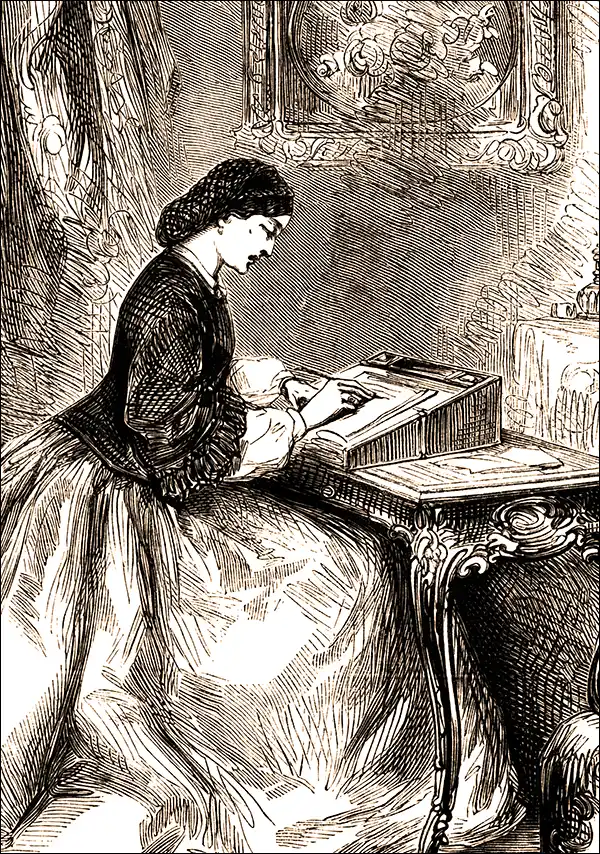
Celia Thaxter (1835-1893) was the most popular American woman poet of her time and the hostess of a summer salon on the Isles of Shoals, off the coast of NH.
Her salon attracted America’s finest writers and artists, including Nathaniel Hawthorne, Henry David Thoreau, John Greenleaf Whittier, Sarah Orne Jewett, William Morris Hunt, Ross Turner and Childe Hassam.
Celia’s Salon features early published work by Celia Thaxter and Childe Hassam in the children’s magazines Wide Awake and St. Nicholas and well-known works from later in their careers; a bowl hand-painted by Celia Thaxter with olive boughs, on special loan from the Portsmouth Athenaeum; delicate floral-decorated china painted in the style of Celia Thaxter on loan from a private collection; rare works by authors who were part of Celia’s salon and more!Salon regulations were simple.
Open hours were stated, and unless you had a personal invitation, seating was not guaranteed—even on the floor! Appledore House, home base to many Celia’s visitors, was one of the first seaside resorts in the United States. Peruse our Appledore Hotel “Registry” and learn about noteworthy poets, painters, journalists and presidents who visited this island retreat.
Examples of local culture, including a seaweed scrapbook and eggshell seed starters, round out the picture of island life. Salem Athenaeum celebrates Celia’s Salon, and our common mission to encourage creativity, and share literature, music and art. In the summers, like Celia, we enjoy a lovely garden and our Friday Salons. Come experience an ambiance of art and literature “in the key of sea.”
Curated by Elaine von Bruns.
Early Birds: Portraits by the Fathers of American Ornithology
Early Birds: Portraits by the Fathers of American Ornithology
Spring – Fall 2015
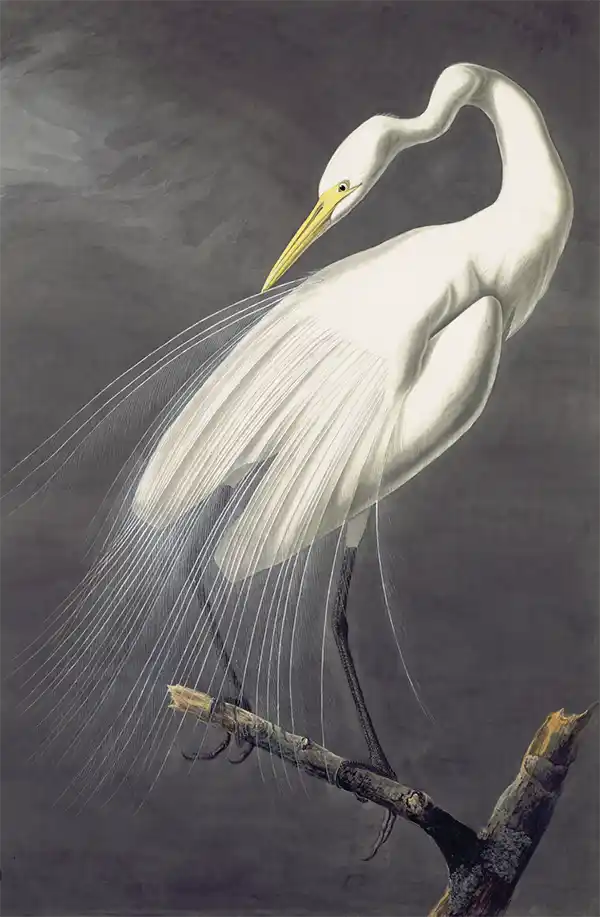
John James Audubon may be America’s best-known ornithologist, but he was not the first to catalog birds. Before Audubon, there was Alexander Wilson. Both men are considered to be the Founding Fathers of American Ornithology.
Wilson, a Scot, and Audubon, a Frenchman, sought to create portraits and biographies of all the bird species of their adopted country. Curator Elaine von Bruns presents an exhibit that celebrates both men and their contributions to nature study.
Wilson’s American Ornithology (1808-1814) and Audubon’s Birds of America (1827-1838) gave Americans and Europeans pictures and information about the wonders of what both men termed “the feathered tribe” of America.
The Athenæum’s nine-volume set of American Ornithology is the focal point of the exhibit. These oversize books are a rare treasure not often on view and include hundreds of hand-colored illustrations.
In addition, Early Birds displays Audubon’s first published bird illustration, and several important volumes from the Athenæum collection that have connections to early ornithological studies in the United States. When you visit, also take note of the newly framed page from the Audubon’s Birds of America now on permanent display the exhibit room.